

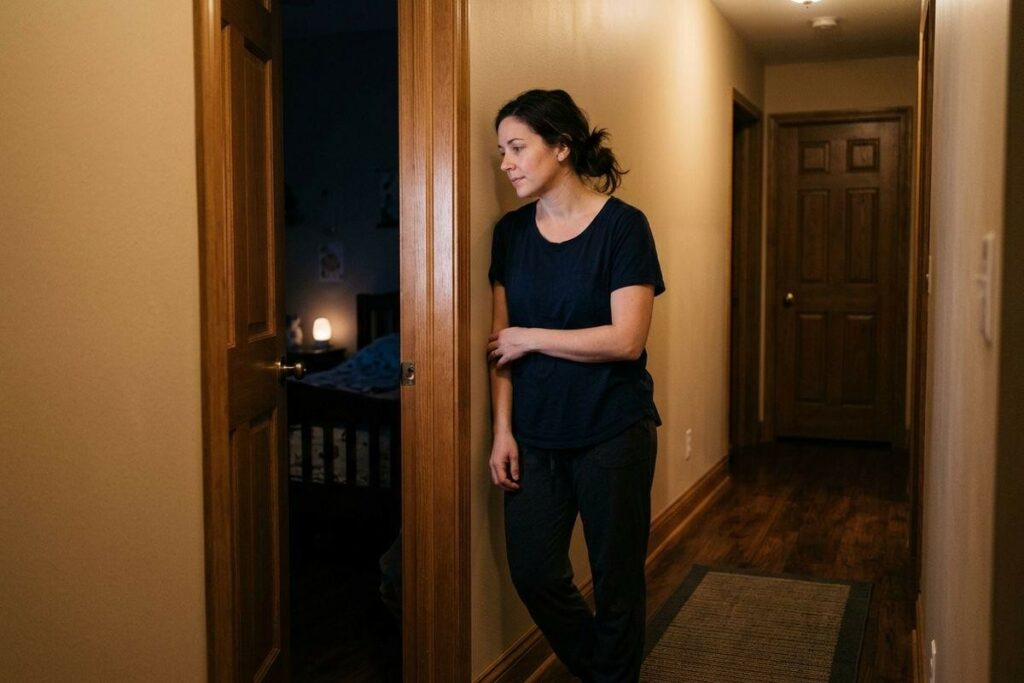
Person leaning against a hallway wall beside an open door to a dimly lit nursery, looking inside with a concerned expression.
Key Takeaways
- Snoring happens when relaxed throat tissues vibrate as air moves past them during sleep.
- Allergies, enlarged tonsils, or a deviated septum can cause the sound.
- Nightly snoring in children can point to restless sleep, which may lead to trouble focusing during the day.
- Loud snoring with silent pauses may signal sleep apnea and should call for a closer look.
You tuck your child into bed, and within minutes you hear a gentle rumbling sound coming from their room. Snoring happens when air moves past relaxed tissues in the throat and makes them vibrate. While that vibration can be caused by factors like allergies or a cold, at Bloom Orthodontics, we know snoring can sometimes signal that something needs a closer look.
A snore here and there usually isn’t much to worry about, but a consistent nightly pattern is different. When snoring becomes a regular part of your child’s sleep, it may be worth having their breathing evaluated. Depending on what’s contributing to the snoring, our dental team may recommend different next steps, which can include orthodontic care.
Main Reasons Behind Snoring
Blocked or Narrow Airways
Most snoring happens when air struggles to get through a tight space. When the nose or throat gets crowded, the sound follows. This can be caused by a few factors, including:
- Allergies, colds, and nasal congestion, which swell tissues.
- Enlarged tonsils or adenoids, which can take up room at the back of the throat.
- A deviated septum, which shifts the wall inside the nose and impacts airflow.
Other Common Triggers
A few other factors can cause snoring. These may include:
- A tongue drifting backward and pressing on the airway.
- Extra body weight, which can narrow the airway during sleep.
- Throat muscles relaxing deeply during some stages of sleep.
Signs Snoring Might Need Attention
Not every snore is a sign that something is wrong. If your child has a cold or a stuffy nose and snores for a day or 2, there’s likely no need to worry. Certain signs, though, are worth mentioning at your child’s next dental visit.
For example, if you notice your child gasping or pausing for short periods while sleeping, it may be a sign of sleep apnea and should be assessed by a professional.
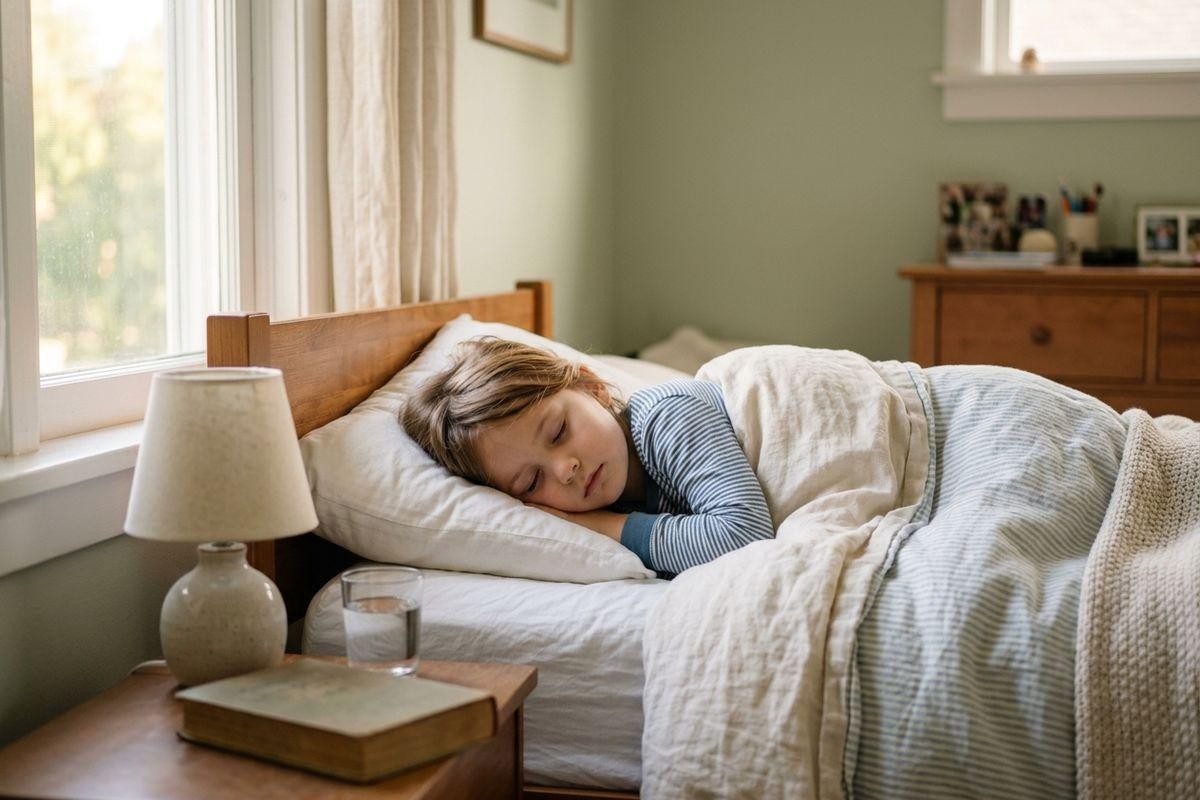
Child sleeping in bed by a window, with a lamp, glass of water, and book on the nightstand.
How Snoring & Sleep Apnea Connect
Snoring and sleep apnea often show up together, though they aren’t the same thing. With sleep apnea, loud snoring is followed by an odd silence. During an obstructive event, the upper airway can become partially or completely blocked, causing breathing to become reduced or pause briefly. The child may then snort, gasp, or briefly arouse before normal breathing resumes. This can repeat many times a night without fully waking them.
Each pause can interrupt deep, steady rest. Over time, disrupted sleep may contribute to daytime tiredness, difficulty paying attention, learning challenges, or changes in behaviour. Treating sleep apnea can help improve those symptoms if they’re related.
How Your Dentist Can Help
Airway-Focused Care for Young Patients
A dentist in Leduc can look at snoring through the lens of your child’s airway, not just their teeth. Your dentist can review how your child breathes, their oral and facial development, and other factors that may be contributing to snoring. If sleep apnea is suspected, your dentist can recommend next steps for diagnosis, which often includes a referral to a sleep study.
Depending on your child’s needs, the team may recommend orthodontic treatment, such as growth-guidance appliances, along with a referral for myofunctional therapy to work on tongue posture, swallowing, and nasal breathing. For teens and adults, the team also offers oral appliance therapy for snoring and mild to moderate sleep apnea.
Simple Habits That Support Better Sleep
While you wait for a sleep study or your dental visit, small changes can help with snoring. Try these tips:
- Encourage your child to sleep on their side instead of lying flat on their back.
- Keep a regular bedtime and wake-up schedule, even on weekends.
- Manage allergies and congestion so the nose stays clear.
Schedule Your Family’s Visit
Snoring can be a temporary side effect for a night or 2, or it can be a quiet signal that your child’s rest needs attention. Our team at Bloom Orthodontics can help you tell the difference with an airway assessment built around your child. Book a visit today and give your family a calmer night’s sleep.